Cardiovascular Outcomes Trials with SGLT-2 inhibitors

SGLT-2 inhibitors, as part of FDA guidance, had to undergo cardiovascular outcomes testing, largely, initially, to demonstrate the safety of these medications in the wake of the rosiglitazone controversy (Kieffer 2020). In this context, three large-scale trials, EMPA-REG OUTCOMES, CANVAS, and DECLARE-TIMI 58 were initiated.

There we significant differences between these studies, principally in the number of patients who did not have evidence of cardiovascular disease (primary prevention) ranging from none in the EMPA-REG OUTCOMES trial to most patients in the DECLARE trial. All three trials enrolled patients with long-standing T2DM (>10 years), as shown in Figure 2 (Neal 2017; Wiviott 2018 ; Zinman 2015;).


Fig 2. Baseline characteristics of EMPA-REG OUTCOME, CANVAS, AND DECLARE-TIMI 58 trials

EMPA-REG OUTCOME (empagliflozin)

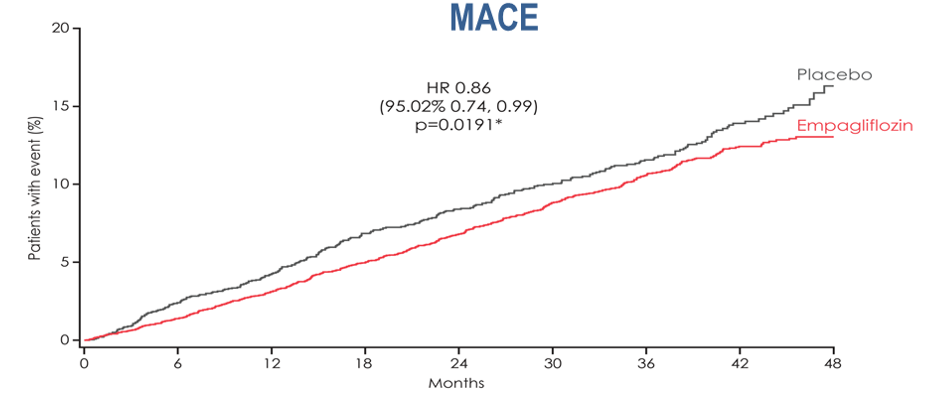
In EMPA-REG OUTCOME, T2DM patients treated with SGLT-2 inhibitor empagliflozin had a 14% reduction in the major adverse cardiovascular events (MACE), a composite of cardiovascular death, MI, and stroke, compared to those receiving placebo, with a hazard ratio (HR) of 0.86 and p-value of 0.02 (Figure 3, Zinman 2015).

Fig 3. Incidence of the primary outcome in EMPA-REG

But, when looking more deeply into the data, perhaps the more striking findings were related to heart failure hospitalization, a 35% relative reduction, and also cardiovascular mortality, which was substantially unexpected, had not been seen previously in anti-diabetic therapies (Figure 4, Zinman 2015).

Fig 4. Incidence of cardiovascular mortality and heart failure hospitalization in EMPA-REG OUTCOME

CANVAS (canagliflozin)

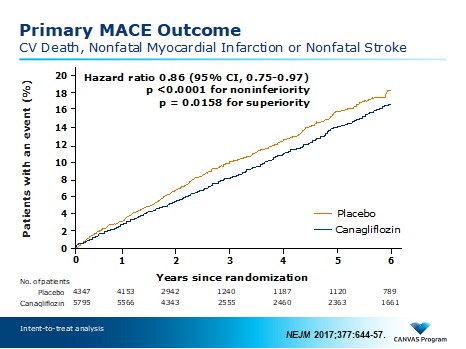
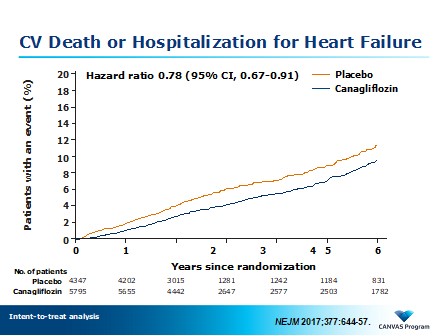
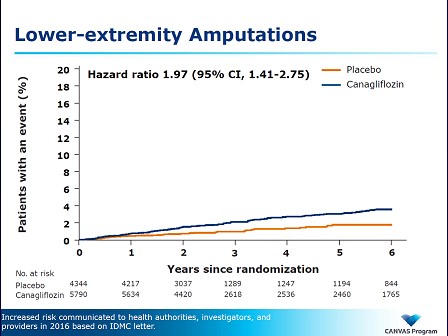
In the CANVAS trial we saw a modest reduction in the combination of cardiovascular death, MI, and stroke, a larger reduction in hospitalization for heart failure (HHF) or cardiovascular death, and an unexpected finding at this time, which was an increase in lower-extremity amputations and something that has continued to be evaluated as we’ve looked at additional trials (Figure 5, Neal 2017).

Fig 5. MACE outcomes, CV Death or HHF, and lower-extremity amputation safety signal in CANVAS

DECLARE-TIMI 58 (dapagliflozin)

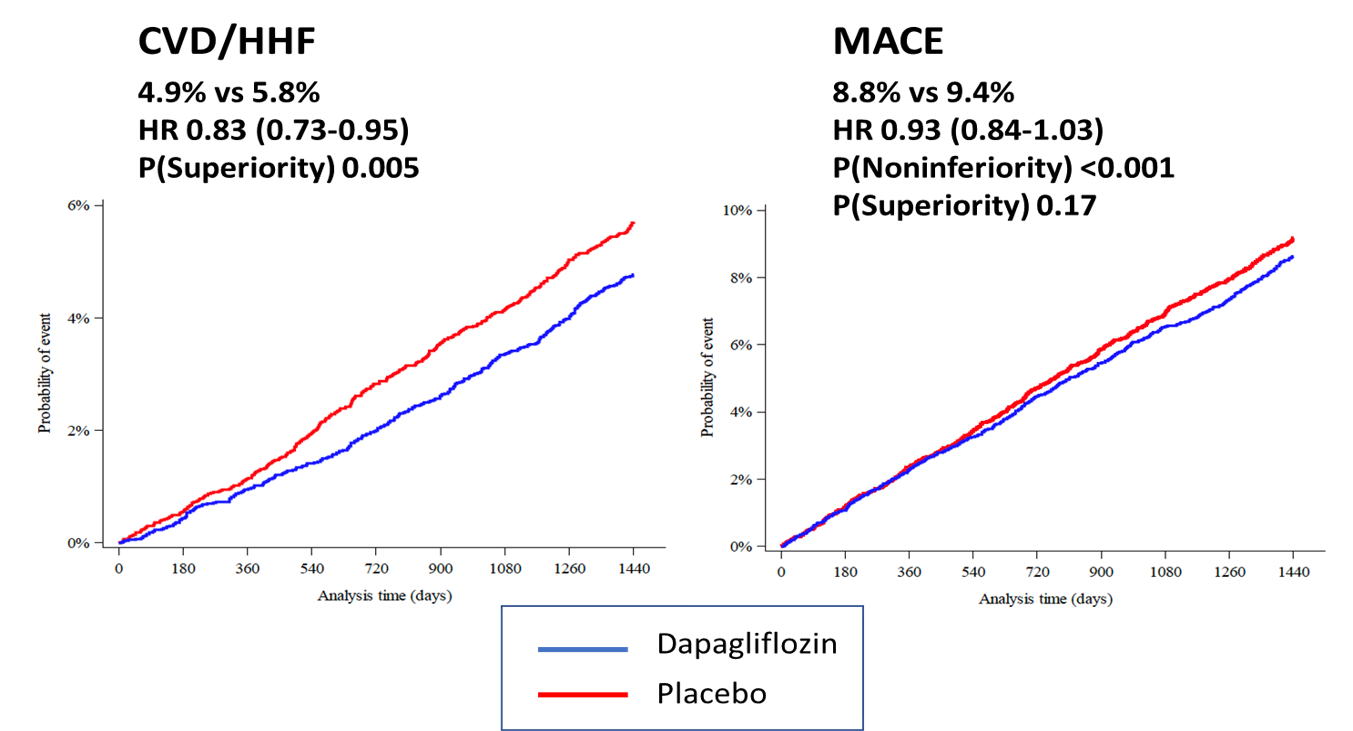
The DECLARE-TIMI 58 trial also demonstrated a substantial reduction in cardiovascular death and hospitalization for heart failure, in a population where the majority of enrolled patients did not have existing cardiovascular disease, but no significant reduction was seen in MACE (CV death, MI, stroke) (Figure 6, Wiviott 2018).

Fig 6. DECLARE-TIMI 58 primary endpoints

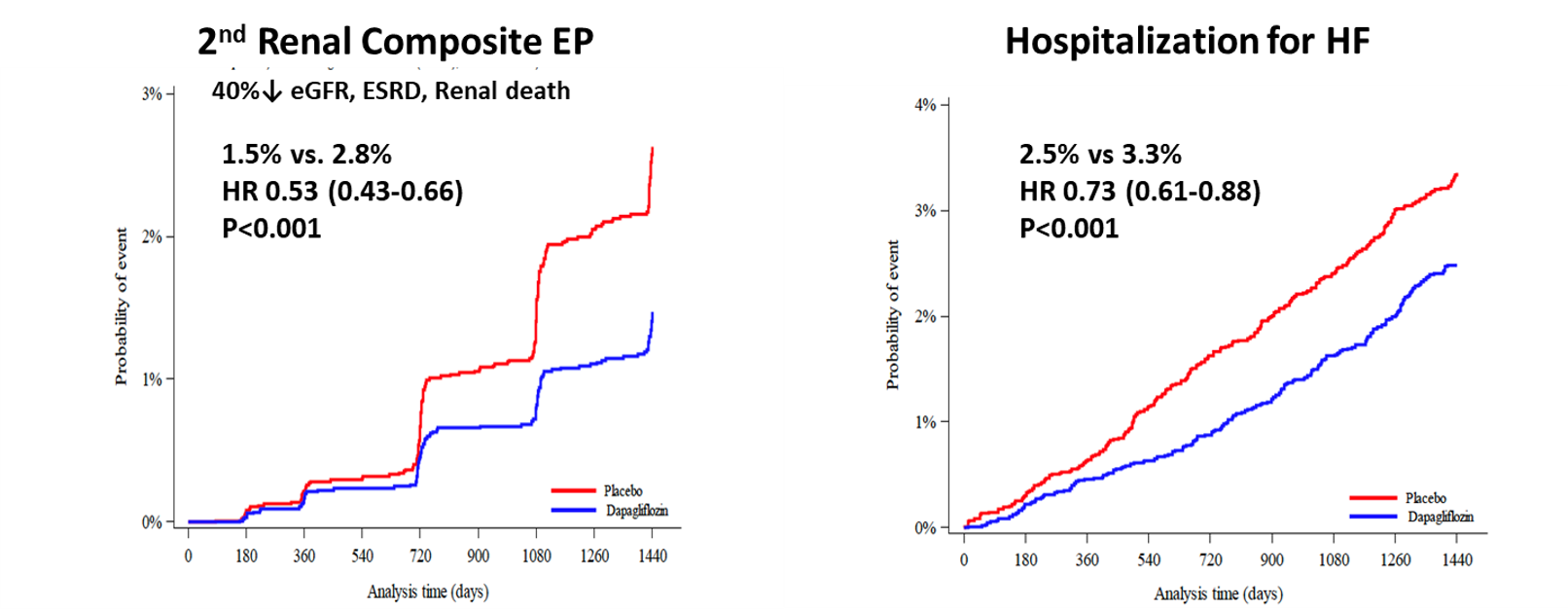
Substantial reductions in renal outcomes were also observed, predominantly reduction in EGFR, ESRD, and renal death. If you look only at the combination of end-stage renal disease or renal death, there was also a significant reduction in this population, as well as about a 27% reduction in hospitalization for heart failure (Figure 7, Wiviott 2018).

Fig 7. Additional endpoints from DECLARE-TIMI 58

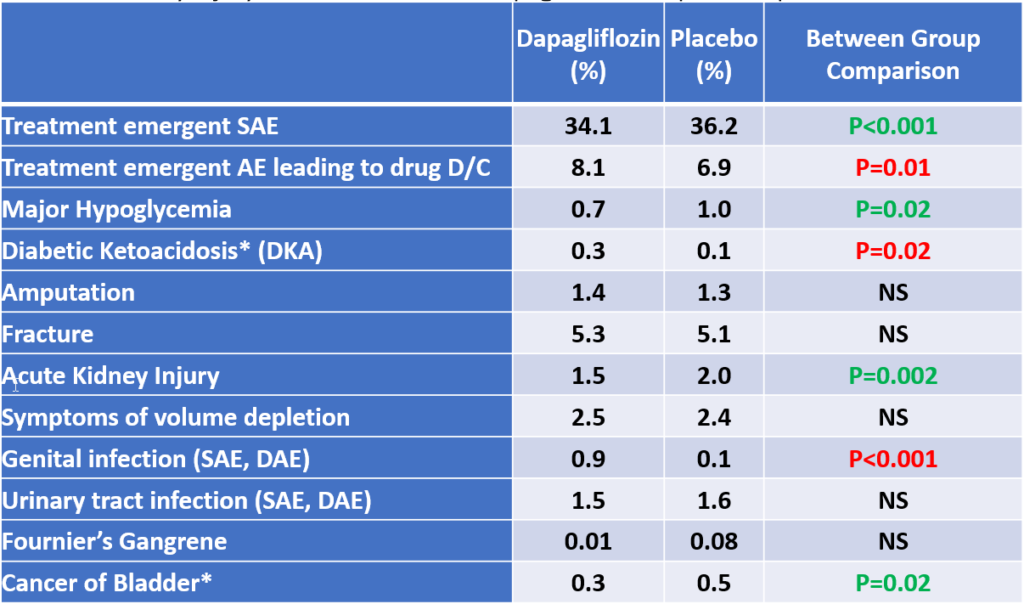
Looking at the safety signals from the DECLARE-TIMI 58 trial (Table 1, Wiviott 2018), similar patterns comparable to the SGLT-2 inhibitor class were observed, including higher rates of diabetic ketoacidosis (DKA)–although rarely seen, as well as higher rates of genital infections both in men and women. However, no differences were observed in urinary tract infections or the more severe form of genitourinary infection forming as gangrene, and lower rates, in fact, of major hypoglycemia and acute kidney injury were observed with dapagliflozin compared to placebo.

Table 1. DECLARE-TIMI 58 key safety events, *Clinical Endpoint Committee (CEC)-adjudicated, NS = not significant

EMPA-REG OUTCOME, CANVAS, DECLARE-TIMI 58: Lessons Learned

Putting these three trials together, there appears to be a discordance where we see a modest reduction of major adverse cardiovascular events, predominantly myocardial infarction, in patients with pre-existing cardiovascular disease, and no difference in patients who did not have pre-existing cardiovascular disease (Figure 8, Zelniker 2018). This conclusion is supported by a meta-analysis of these trials showing that MACE reduction was apparent only in patients with established atherosclerotic cardiovascular disease (Zelniker 2018).

Figure 8. MACE by presence of ASCVD in EMPA-REG OUTCOME, CANVAS, and DECLARE-TIMI 58

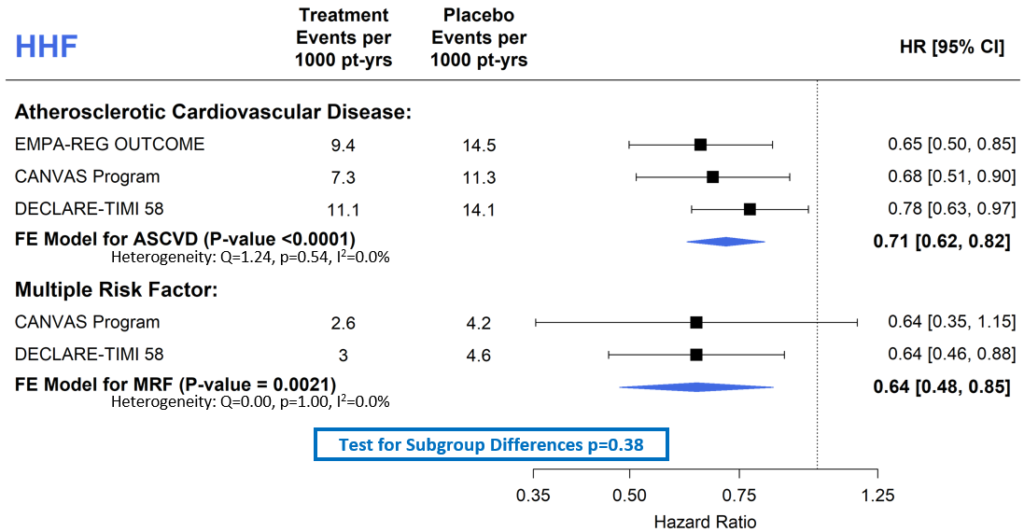
Whereas, the reduction in hospitalization for heart failure (HHF) was robust and similar in magnitude regardless of the presence of atherosclerotic cardiovascular disease (Figure 9, Zelniker 2018).

Figure 9. HHF by Presence of ASCVD EMPA-REG OUTCOME, CANVAS, and DECLARE-TIMI 58

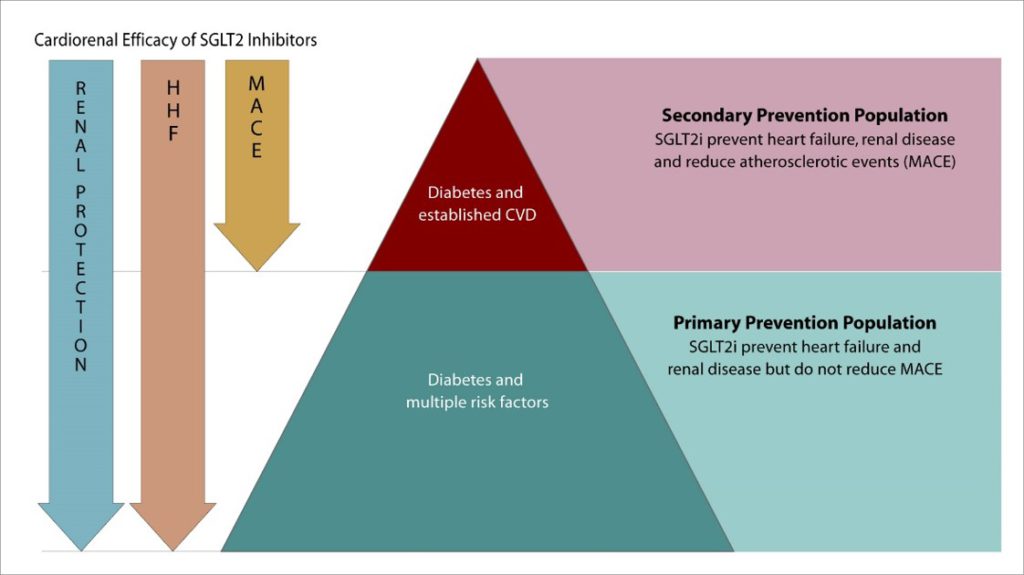
This led to an editorial by Subodh Verma, MD from Toronto, Canada, where patients with diabetes and established cardiovascular disease are patients who were at the highest risk and are only the tip of the iceberg (Figure 10, Verma 2019). In these patients, we see a reduction in MACE and hospitalization for heart failure, as well as renal protection. Whereas, the primary prevention population, the much larger, but lower risk subgroup of patients, we also see the reduction in renal events and heart failure events (Verma 2019).

Figure 10. Cardiorenal efficacy of SGLT-2 inhibitors-lessons learned from EMPA-REG OUTCOME, CANVAS, and DECLARE-TIMI 58 trials
Course Progress0%