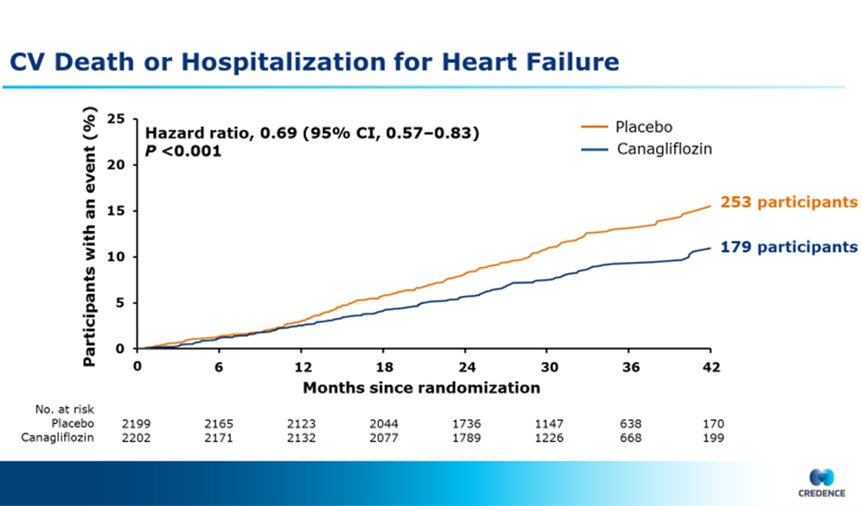
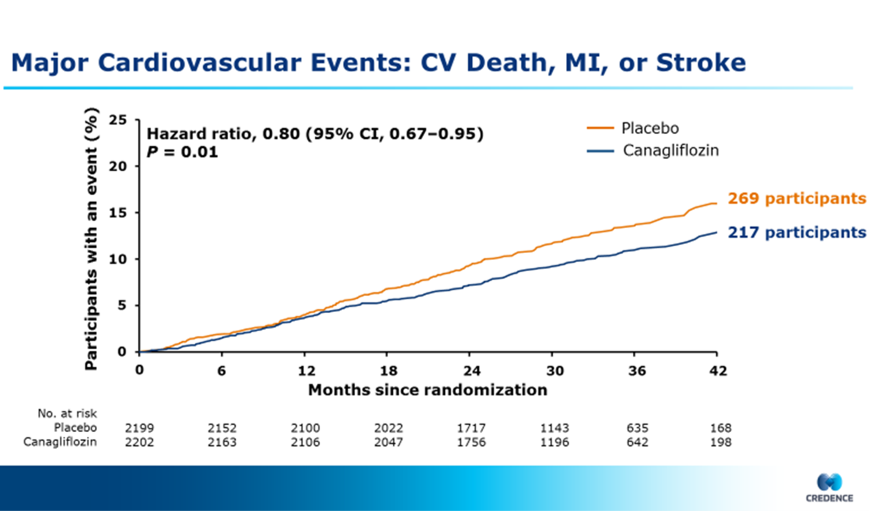
In addition, canagliflozin was associated with a lower risk of cardiovascular death, myocardial infarction, or stroke, and hospitalization for heart failure compared to placebo; while being relatively safe (no differences in amputation rates or fractures) over a median follow-up period of 2.6 years (Figs 22 & 23, Perkovic 2019). ). Based on CREDENCE results, recently the FDA expanded the indication of canagliflozin to reduce the risk of end-stage kidney disease (ESKD), worsening of kidney function, CV death, and hospitalization for HF in adults with T2DM and DKD, making it the first T2DM therapy with an indication to treat both DKD and reduce HF hospitalization risk in this patient population (Cherney 2019).