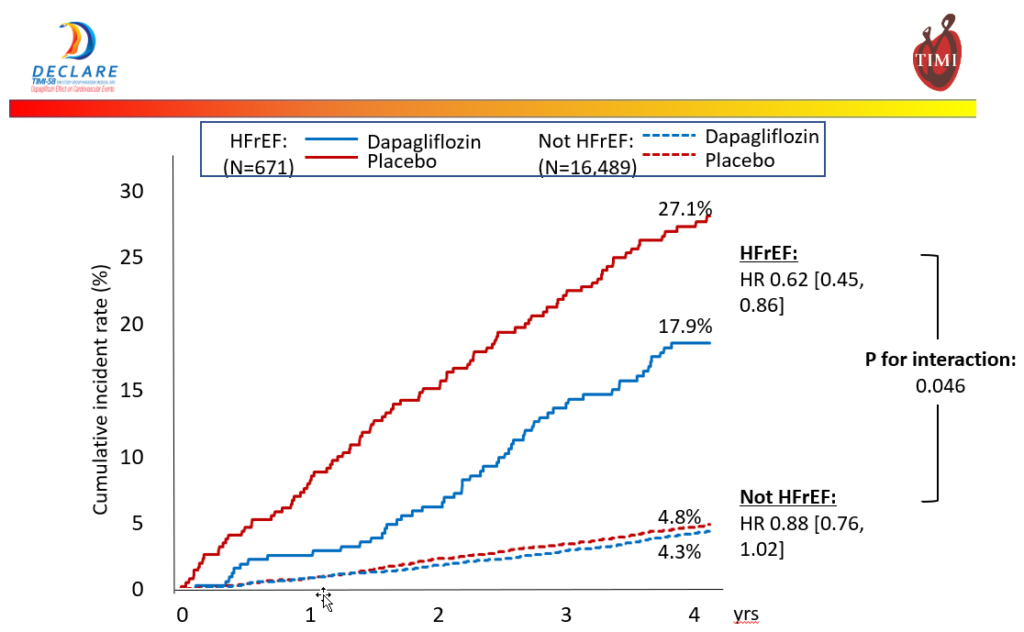
The next phase of the SGLT-2i story and cardiovascular outcomes trials relates to patients with heart failure. The DECLARE-TIMI 58 trial was the first CVOT with an SGLT-2 inhibitor that stratified T2DM patients by ejection fraction (EF). A sub-analysis of this trial in patients who were known to have pre-existing heart failure showed that in patients with heart failure with reduced ejection fraction, hospitalization for heart failure or cardiovascular death were reduced 38% relative risk reduction) with dapagliflozin compared to placebo (Figure 11, Kato 2019) . In turn, in patients without HFrEF, only a mild reduction was observed.
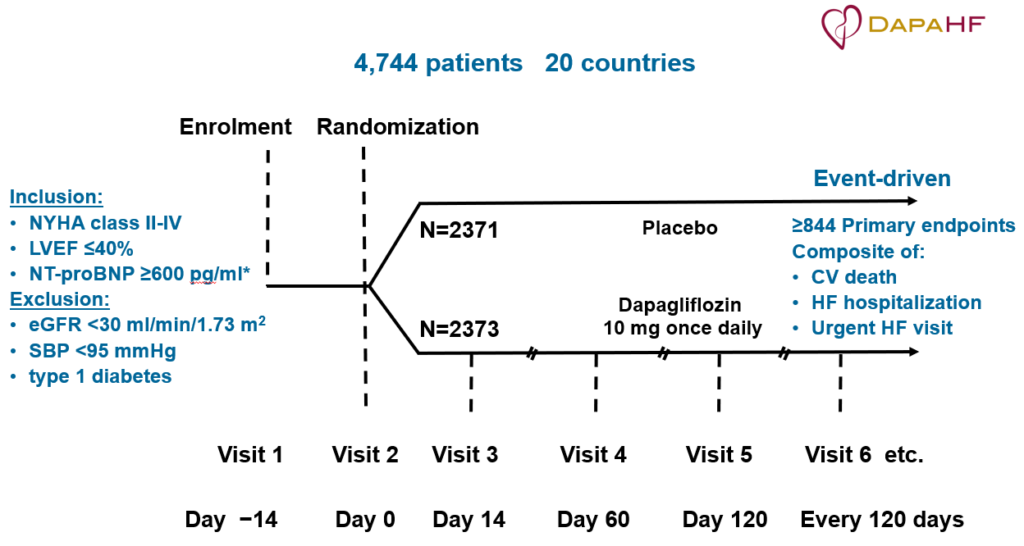
This set the stage for the next of the landmark trials in this area, the DAPA-Heart Failure trial (McMurray 2019). This trial enrolled patients with heart failure with reduced ejection fraction (EF <40%) and an elevated BNP to evaluate the effect of dapagliflozin on the occurrence of the primary endpoint (a composite of CV death, HF hospitalization, or urgent HF visits) compared to placebo (Figure 12, McMurray 2019). One of the major differences compared to prior trials is that it was not necessary to have type 2 diabetes (T2D) to be included in this trial, indeed, only about 42% of the trial population had T2D (McMurray 2019).
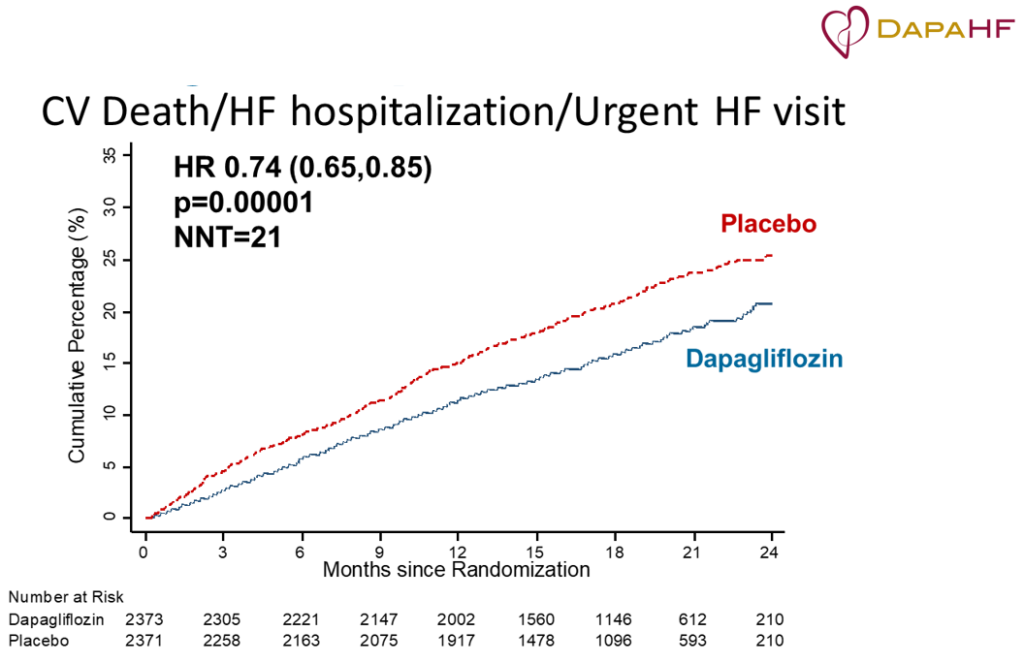
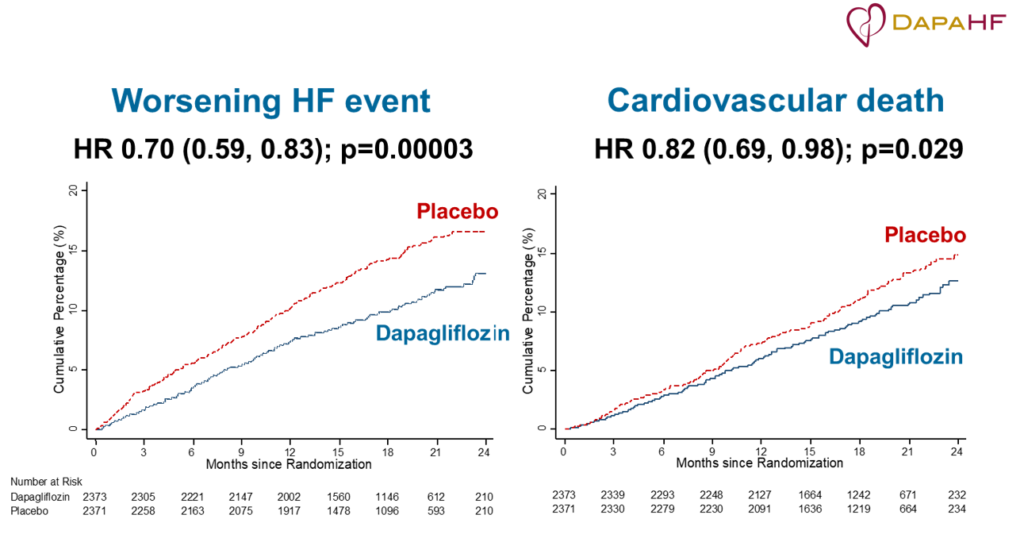
There was a significant reduction in the primary outcome of cardiovascular death, hospitalization for heart failure, or urgent heart failure visit in patients treated with dapagliflozin compared to the placebo group (26% risk reduction), with just over 20 patients needed to be treated to prevent one event (Figure 13, McMurray 2019). Furthermore, both components of the primary outcome, worsening heart failure event and cardiovascular death, were statistically reduced in this trial (Figure 14, McMurray 2019).
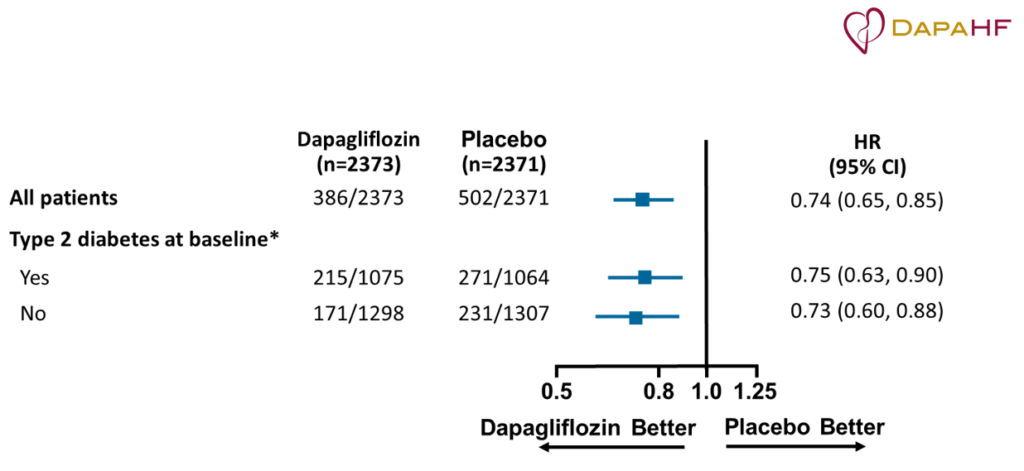
The benefit of dapagliflozin in this trial was consistent, regardless of whether patients had diabetes at baseline or not. There was a higher risk in patients with diabetes, but the relative benefit was similar for both patients with and without diabetes (Figure 15, McMurray 2019).
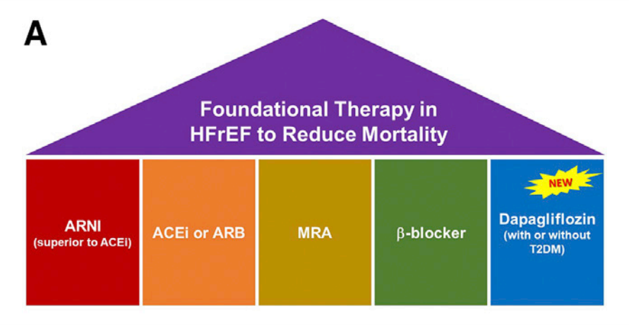
Indeed, the FDA has now approved dapagliflozin as an SGLT-2 inhibitor, both for the prevention of heart failure hospitalization in patients with diabetes, those who did not have heart failure at baseline, and also for the treatment of heart failure in patients with existing heart failure, regardless of whether they had diabetes (Das 2020). Based on these results, a recent editorial by Deepak Bhatt, MD, and Eugene Braunwald, MD, suggested that dapagliflozin should be considered as part of foundational therapy to reduce mortality in heart failure with reduced ejection fraction, alongside with the angiotensin receptor-neprilysin inhibitor (ARNI) sacubitril/valsartan, angiotensin-converting enzyme (ACE) inhibitors, angiotensin II receptor blockers (ARBs), mineralocorticoid receptor antagonists (MRAs), and beta blockers (Figure 16, Bhatt and Braunwald 2019).
The findings from DAPA-HF were confirmed in the EMPEROR-Reduced trial, which was presented at the European Society of Cardiology meeting in August 2020. This trial evaluated the effects of SGLT-2 inhibitor empagliflozin as it pertains to the composite outcome of cardiovascular death or hospitalization for worsening heart failure in patients with heart failure and reduced ejection fraction (Packer 2020). Similar to the DAPA-HF trial, it enrolled patients with left ventricular ejection fraction ≤ 40% and elevated NT-proBNP, regardless of the presence or absence of T2D at baseline (Packer 2020).
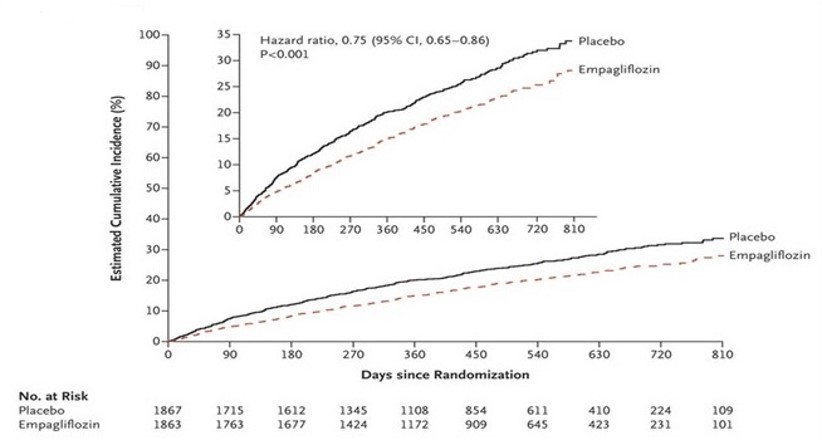
In this trial, empagliflozin reduced the risk of the occurrence of the primary outcome compared to placebo (27% relative risk reduction), and this effect was consistent regardless of the presence or absence of T2D (Figure 17, Packer 2020).
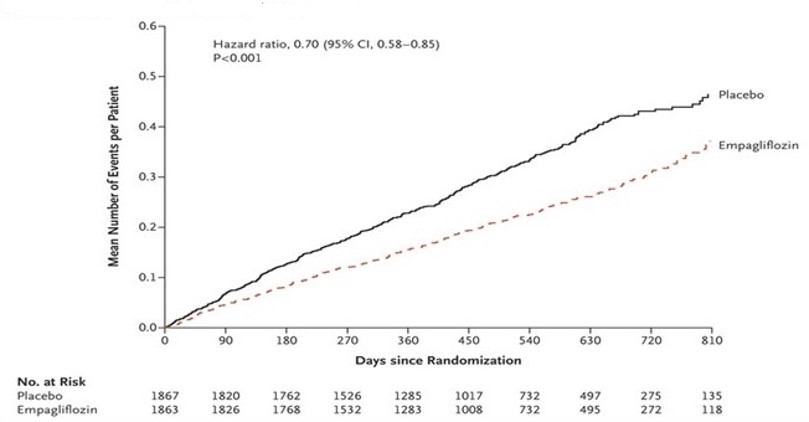
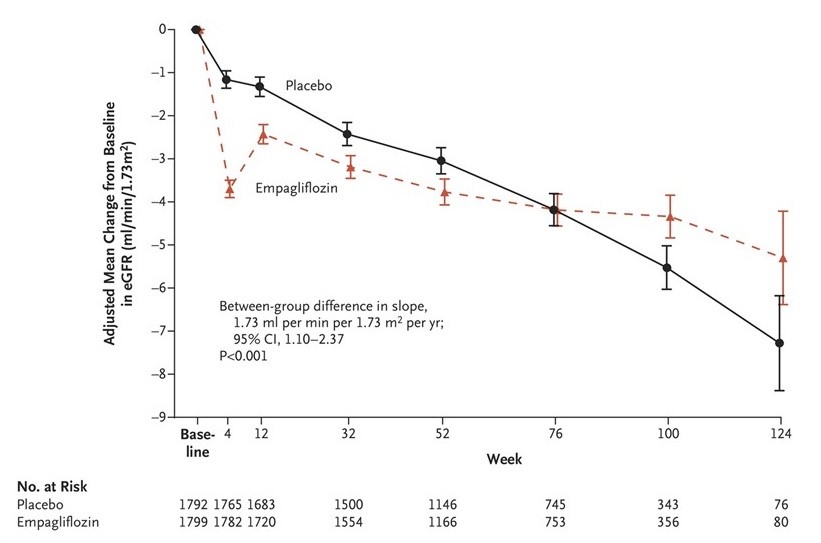
Furthermore, there was a significant reduction in the number of hospitalizations for HF in the empagliflozin group compared to placebo (HR = 0.70, p<0.0001), as well as slower annual decline in estimated glomerular filtration rate (eGFR) with empagliflozin (Figs. 18 & 19 respectively, Packer 2020).
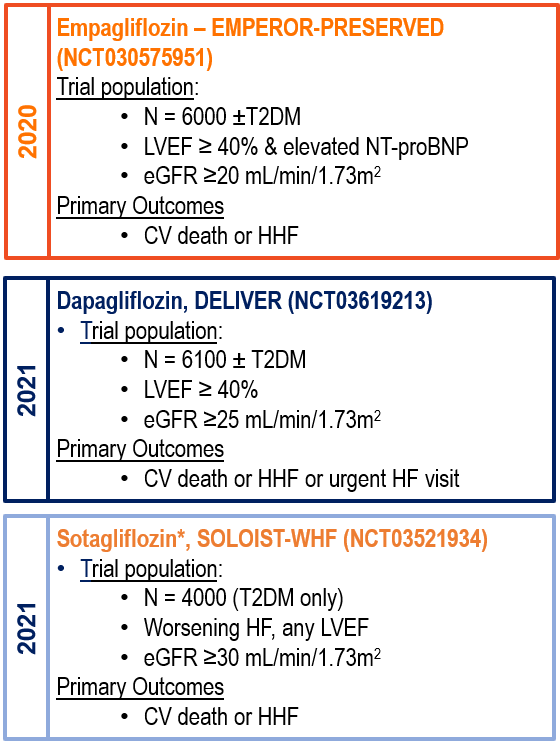
Additional phase 3 trials that are evaluating the role of SGLT-2 inhibitors in treating established heart failure in patients with and without diabetes are ongoing (Figure 20), and their results will help to determine the role of these agents across HF populations.