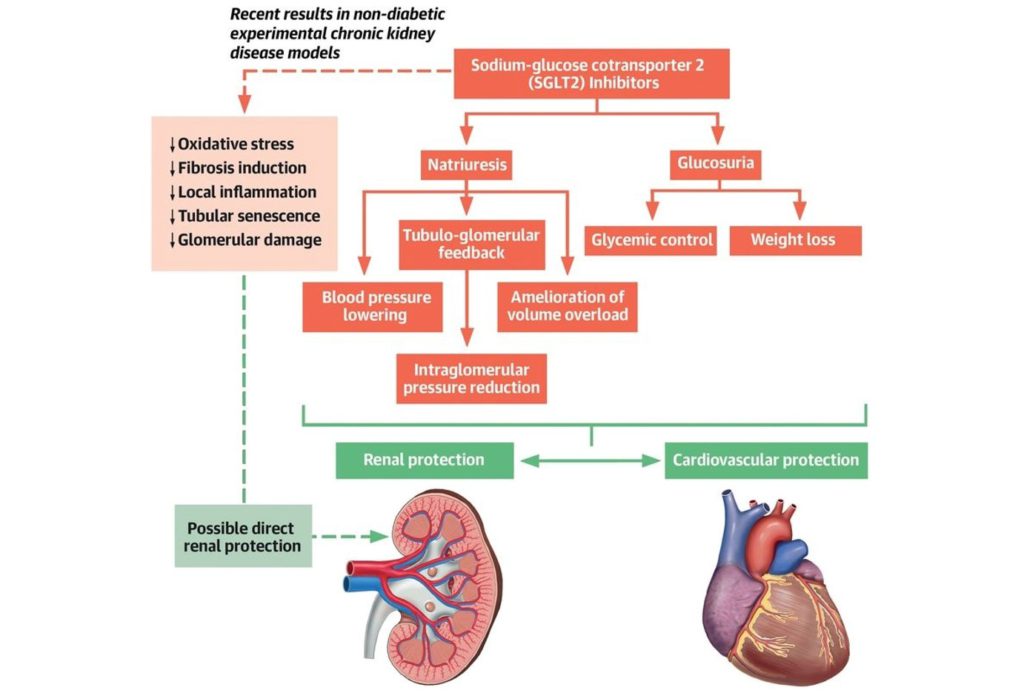
Although the exact mechanisms by which SGLT-2 inhibitors improve cardio-renal outcomes have not been fully elucidated, it is possible that mechanisms beyond glucose lowering are involved (van Bommel 2017). This is due to the observations that renal benefits were observed despite HbA1c levels, and although the glucose-lowering efficacy of SGLT-2 inhibitors declines at the low eGFR range, the cardiovascular benefits were also preserved, suggesting glycemic-independent effects (van Bommel 2017; Verma 2018). Additional mechanisms, including tubuloglomerular feedback, reduction in glomerular hypertension, effects on sodium-hydrogen exchange, improvement in cardiac metabolism, ventricular loading and afterload, as well as alterations in adipokines, cytokine production and epicardial adipose tissue mass have been proposed (Figure 27, Zelniker 2020).